I just read Magnifica Humanitas, Pope Leo XIV’s encyclical on artificial intelligence and, more broadly, on the social doctrine of the Catholic Church, with two minds at work.
The first is the mind of an IT and Data leader. It reads the text through the practical grammar of organizations: governance, sovereignty, platforms, use cases, data, cybersecurity, adoption, architecture, vendors, operating models, risk committees, employee experience, consumer trust, regulatory exposure and measurable value.
The second is older, quieter and harder to put on a roadmap. It hears words such as dignity, conscience, discernment, responsibility, common good and peace with a different resonance. Those words do not belong in a museum. They belong in the meeting rooms where we decide what kind of technology we are willing to build, buy, deploy, and normalize.
That is why this encyclical deserves attention far beyond theological circles. It does not offer a technical framework for AI. It does something more uncomfortable. It asks what kind of human beings we become when our tools acquire unprecedented power over work, knowledge, judgment, attention, and trust.
For a CIO, that question is no longer philosophical decoration. It is daily work.
Artificial intelligence has already entered the enterprise through the front door, the back door and a few windows left open by enthusiasm. It supports developers, analysts, marketers, lawyers, finance teams, sales teams, HR teams and managers. It summarizes, drafts, classifies, summarizes, recommends, translates, searches, monitors, predicts, and creates. Used with care, it can remove friction, accelerate learning, improve services and give people time back for higher-value work.
The encyclical does not deny this promise. It refuses the laziness of worshipping it.
One of its most useful sentences for technology leaders is its warning that AI cannot be considered morally neutral, because it takes on the characteristics of those who design, fund, regulate, and use it. Every technical system contains choices. What it measures, what it ignores, what it optimizes, what it classifies, what it hides, what it makes easy and what it makes almost impossible: all of this is already an ethical landscape. A model does not arrive in the organization as pure neutral intelligence. It arrives with data, assumptions, incentives, exclusions, dependencies, and a certain vision of the human person.
This is where “do no harm” becomes more than a noble intention.
In a company, harm rarely announces itself with dramatic music. It often enters politely, through a productivity case, a dashboard, an automated workflow, a scoring mechanism, a chatbot, and a pilot that becomes permanent without anyone remembering who approved it. Harm can mean biased outputs. It can mean employee surveillance disguised as performance insight. It can mean consumer interaction without transparency. It can mean opaque decisions with no appeal. It can mean the quiet transfer of responsibility from a person to a system nobody fully understands or trust.
I do not believe the answer is fear. Fear is a poor architect. I believe the answer is disciplined discernment keeping in mind that human dignity is non-negotiable. it is not a variable in an equation; it is the result.
Discernment is slower than enthusiasm and more useful than panic. It asks what problem we are solving, who benefits, who may be exposed, what data is used, what human review remains, what can be audited, what happens when the system fails, and who is accountable when damage occurs. It accepts that some use cases should move quickly, some should move carefully, and some should not move at all.
This is where the encyclical’s call to “disarm AI” becomes particularly powerful.
The word is deliberate. It reaches beyond the battlefield, although the battlefield is clearly part of the concern. AI can make violence faster, more remote, more impersonal and easier to justify. The encyclical is explicit that lethal decisions cannot be delegated to opaque or automated processes (There is no algorithm capable of making war morally acceptable). That line, that logic alone should make every technology leader stop for a moment.
Yet disarming AI also has a corporate meaning.
It means freeing AI from the logic of domination. It means resisting the idea that technical power gives anyone the right to govern without scrutiny. It means avoiding the arms race of bigger models, larger datasets and faster deployment when the only real argument is competitive anxiety. It means preventing AI from becoming an instrument of exclusion, manipulation, dependency, or control. It means refusing to confuse adoption with wisdom.
This matters because companies are becoming environments shaped by digital infrastructures. Platforms define visibility. Algorithms influence knowledge and decisions. Data architectures determine what can be known and by whom. Workflow systems shape habits. Collaboration tools shape attention. AI assistants will increasingly shape how people think, write, search, decide and remember.
We should be honest about that power. It is to remind us of this that Pope Leo quotes Paul VI when he warned that “the most extraordinary scientific advances, the most astonishing technical feats, and the most prodigious economic growth, if not accompanied by authentic social and moral progress, will ultimately turn against humanity”
The encyclical speaks clearly about the concentration of digital power in the hands of a few actors who control infrastructure, data, platforms and computing capacity. This is not an anti-business statement. It is a lucid description of the world in which companies now operate. CIOs know this reality very well. We negotiate with ecosystems that are larger than many states, depend on platforms whose roadmaps we do not control, and make architecture decisions that can create freedom or dependency for years.
That is why data governance cannot be reduced to compliance.
Data is a relationship of trust. It is created by people, employees, consumers, citizens, suppliers, and communities. Treating data responsibly means asking whether our practices are proportionate, explainable, secure, fair and aligned with the promises we make. The encyclical goes further by describing data as something that should be thought of creatively as a common or shared good. That language is demanding. It challenges the habit of seeing data only as an asset to be extracted, monetized and protected from competitors.
In food, health and everyday consumption, this question becomes even more concrete.
People do not invite brands into their lives as abstract market segments. They do so through confidence, habit, care, family, taste, nutrition, vulnerability, and memory. A company like Danone carries a particular responsibility because its relationship with consumers is tied to life in its most ordinary and intimate forms. Technology in such an organization should make the company more attentive, more reliable, more transparent, and more responsible. The role of Danone’s executives, of whom I am one, therefore takes on a new dimension.
The same applies internally.
AI will change work. It already does. It will help some people become more effective and leave others anxious about their place. The encyclical’s reflections on work are essential here. It reminds us that innovation should serve dignified work, and that the cost of adaptation cannot simply be pushed onto individuals. Training, transition, inclusion and the quality of work must become indicators of success.
That is a very practical point.
If we deploy AI without helping people understand it, we create dependency. If we encourage experimentation without guardrails, we create risk. If we impose tools without listening to the people who will live with them, we create resistance. If we celebrate productivity while ignoring anxiety, we lose trust. The best AI strategy will therefore be cultural before it becomes technical. It will require education, dialogue, clear rules, shared vocabulary, and managers capable of holding nuanced conversations without asking AI to do it for them. More and more managerial tasks are now being entrusted, directly or indirectly, to AI (performance reviews, feedback, career paths, etc.) that lack compassion, mercy, forgiveness, and, above all, openness to the hope of personal transformation, and may thus give rise to new forms of exclusion. We can find ourselves on a ridge very quickly.
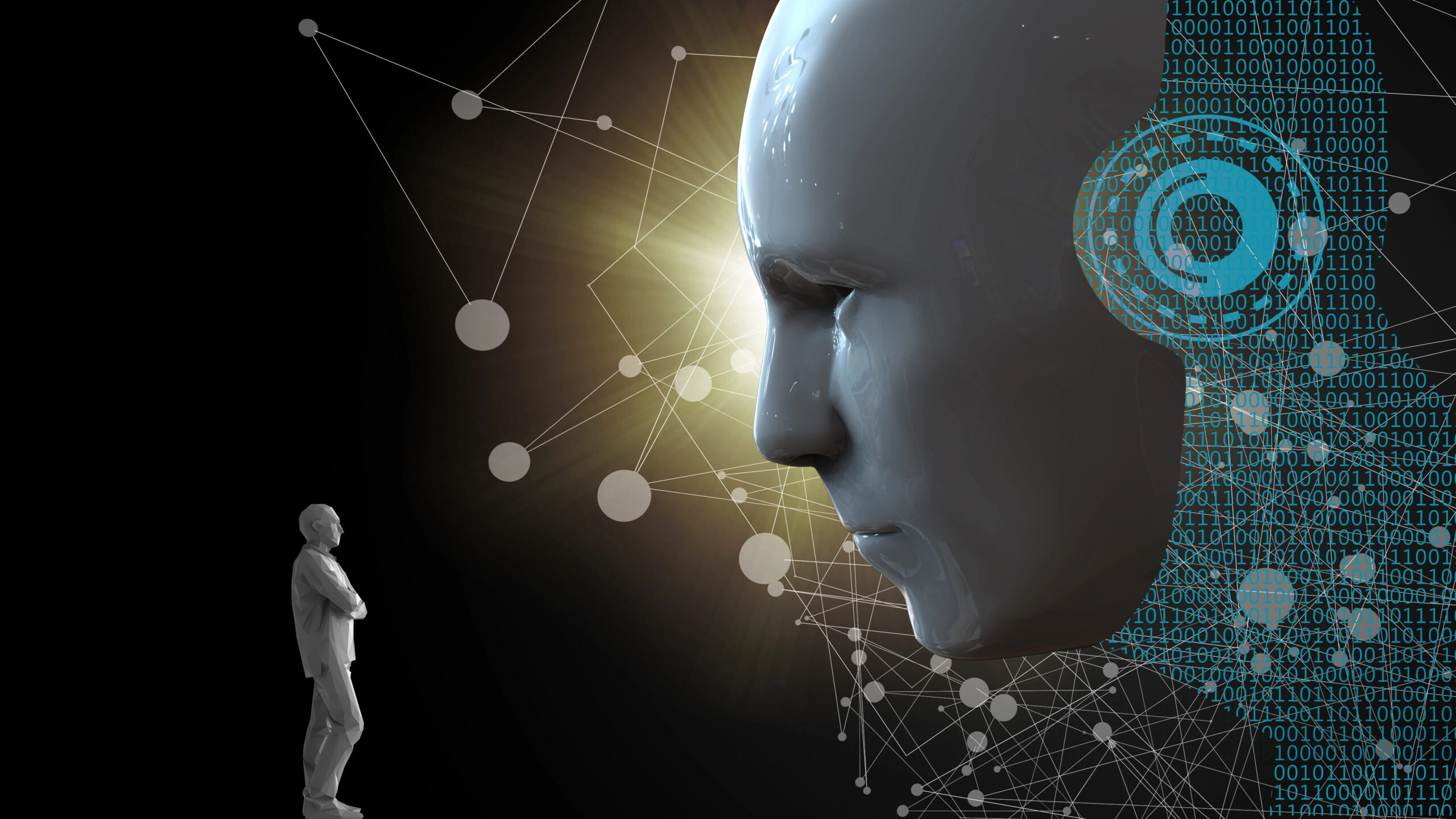
The human must remain in the middle.
I know this phrase can sound like a slogan. It should be treated as an operating principle.
Human in the middle means that people know when AI is being used. It means that decisions affecting people can be questioned. It means that accountability has a name. It means that systems are designed with the affected communities in mind. It means that employees are trained rather than abandoned. It means that consumers are respected rather than profiled into submission. It means that the vulnerable are considered at design stage, not remembered after damage has occurred.
It also means protecting the parts of human intelligence that machines imitate badly and cannot possess: conscience, compassion, context, memory, forgiveness, prudence, silence, care, courage and the ability to take responsibility before another person’s face.
The encyclical is striking on this point. It refuses to reduce the human being to efficiency, cognitive performance or data. It reminds us that no computational system can create a conscience that discerns good from evil. That sentence has consequences for enterprise AI. A system may support judgment. It may enrich analysis. It may reveal patterns. It may challenge blind spots. It may draft a recommendation. The final moral burden remains human.
This is not romanticism. It is governance.
The more powerful the tool, the more precise the responsibility must be. Who owns the use case? Who validates the data? Who monitors drift? Who can stop the system? Who explains the decision? Who protects the person affected by it? Who answers when things go wrong? If these questions remain vague, the organisation has not governed AI. It has merely installed it.
Pope Leo quotes Romano Guardini’s whose words remain relevant today: Modern man has not received the education necessary to make good use of his power, counting on us to prove that this sad verdict is false.
There is another part of the encyclical that deserves attention because it cuts through the mythology of the immaterial digital world. AI is not magic. It is built on energy, infrastructure, minerals, supply chains, data centers and invisible labor. Behind the apparent elegance of a generated answer are people who label data, moderate content, extract materials, maintain infrastructure, and absorb costs that users rarely see.
A responsible AI strategy must therefore include sustainability and supply chain ethics. The environmental footprint of AI, the social conditions behind digital production, the transparency of technology suppliers, and the energy intensity of our choices belong in the same conversation as innovation. Digital responsibility cannot stop at cybersecurity and privacy. It must include the whole chain.
This is where I find the encyclical particularly useful for CIOs. It refuses the comfort of silos. It connects data to justice, infrastructure to power, innovation to work, governance to dignity, technology to peace, and progress to the common good. That is exactly how AI now enters the enterprise: across every boundary at once.
The CIO is no longer only the guardian of systems. The CIO is increasingly a translator between technical possibility and institutional responsibility.
That role requires humility. We do not have all the answers. The models change. The vendors change. The regulatory environment changes. The risks evolve. Even those who build these systems often have limited understanding of their actual functioning. The encyclical acknowledges this instability with unusual clarity. Any statement on AI can become outdated quickly. That is precisely why we need principles strong enough to guide us when the tools change.
For me, those principles are becoming clearer.
No use case without purpose.
No automation without accountability.
No data use without proportionality.
No productivity gain without attention to human consequences.
No AI deployment without education.
No system affecting people without human recourse.
No concentration of technical power without scrutiny.
No innovation that quietly makes the organization less humane.
This is not a brake on transformation. It is the condition for transformation that lasts.
The companies that will succeed with AI will not be those that run the loudest pilots or buy the most impressive platforms. They will be the ones that build trust into their operating model. They will combine technical excellence with ethical clarity. They will make AI useful without making it obscure. They will allow experimentation without glorifying recklessness. They will protect the human person because, deep down, they understand that every organization is built on a fragile and powerful thing: trust.
I finished the encyclical with a sentence still in my mind: we must remain profoundly human.
That is a demanding program for our time. For believers, it has a depth that goes beyond management language. For technology leaders, it has an operational force that should shape our roadmaps. For companies, it offers a simple test.
Does this technology help us become more attentive, more just, more responsible, and more capable of serving people? If the answer is yes, let us build with courage. If the answer is unclear, let us slow down and discern. If the answer is no, let us have the strength to refuse.
AI will become part of the fabric of every organization. The real question is the kind of fabric we are weaving.
I want technology that helps people work better, decide more wisely, serve more responsibly and remain more human.
That is the middle worth protecting.